If you are planning a horse property in Davie, the barn can make or break how the acreage lives day to day. A beautiful structure matters, but in South Florida, function comes first. Heat, humidity, heavy rain, drainage, storage, and storm planning all shape what a modern equestrian barn should look like. This guide will walk you through the design choices that matter most on Davie acreage, so you can think like an owner and a buyer at the same time. Let’s dive in.
Why Davie Barn Design Is Different
Davie is not a generic horse market. The town has a long-standing commitment to preserving agricultural and semi-rural land through its Open Space Program, and its trail network includes unpaved paths designed for equestrian use. The town also notes that new development should include trail connections as part of site planning, which makes layout decisions especially important on horse properties.
Certain areas reflect that equestrian focus more clearly than others. According to the town, Oak Hill is one of Davie’s most equestrian-oriented communities, with lots of at least one acre and often more. That same town resource also identifies equestrian-use areas in Pine Island Ridge and Tree Tops, showing how site character and usable land can influence barn planning.
In practical terms, a modern barn in Davie should fit the land, support horses in Florida conditions, and work with the property’s access and circulation. It should also reflect the kind of functional amenities local buyers recognize, not just visual upgrades.
Start With the Site First
Before you think about finishes, start with the ground. Davie’s climate normals for the region show 64.17 inches of annual precipitation, which means barn pads, roof runoff, and surrounding footing need to move water away quickly. On acreage, a poorly placed barn can create mud, maintenance issues, and long-term wear on both the structure and the land.
Higher and better-drained ground can be a major advantage. Davie’s floodplain rules require permits before construction or grading that changes site elevations, and they also require elevation certificates for new or substantially improved buildings in applicable cases, as outlined in the town’s floodplain development permit requirements. If you are renovating or building, those checks should happen early.
A strong site plan usually accounts for:
- Barn placement on higher, well-drained ground where possible
- Clear roof runoff paths
- Trailer access and turn radius
- Separation between stalls, storage, and manure areas
- Efficient movement to paddocks, pastures, riding areas, and trails
This is where modern design becomes practical design. A sleek barn that sits in the wrong place will never perform as well as a simpler layout that works with Davie’s conditions.
Prioritize Airflow in Every Decision
In Florida, ventilation is not a luxury upgrade. UF/IFAS notes that heat and humidity reduce horses’ ability to cool through evaporation, which is why shade, fans, and clean water are central management tools. For barn design, airflow should be treated as a core requirement from the start.
UF/IFAS recommends a shedrow barn layout for Florida because it supports good ventilation. That same guidance recommends 12-by-12-foot stalls with sliding doors, along with practical support spaces like feed and tack rooms, a bathroom, and easy access from stalls to feed storage.
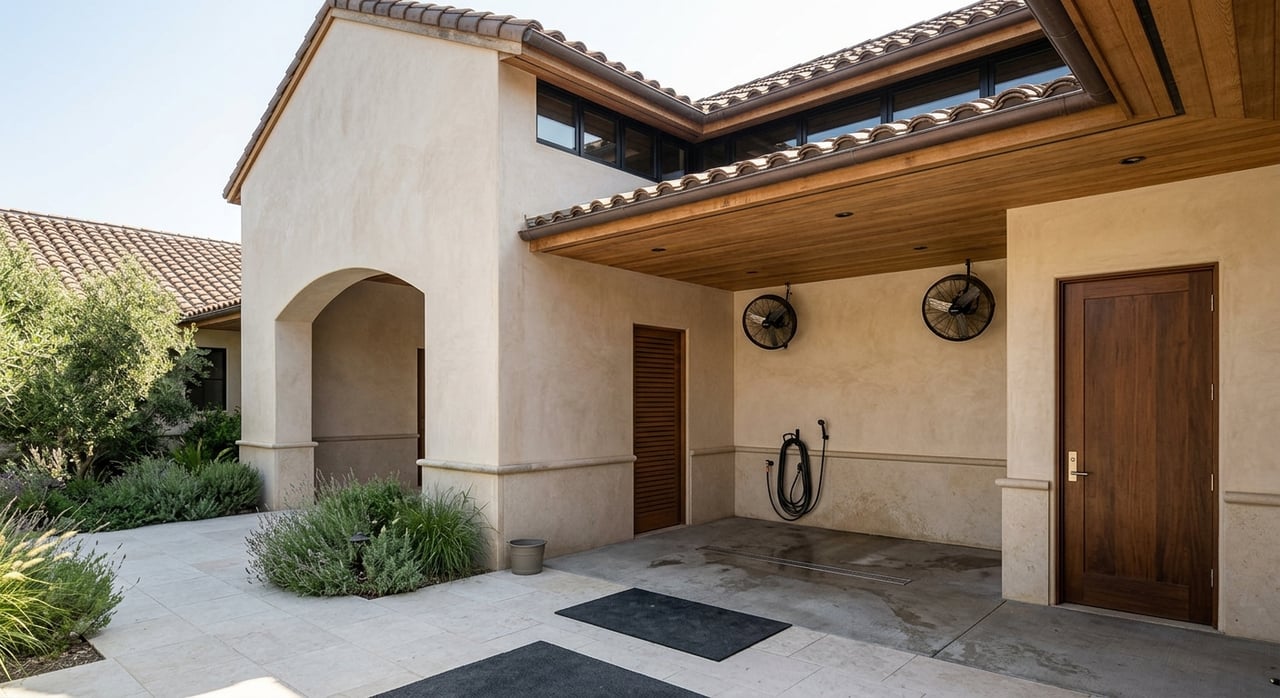
Ventilation details matter too. UF/IFAS explains that air should enter through side or eave vents and exit through a ridge vent, with tunnel ventilation available when additional airflow is needed. In Davie, that means the cleanest-looking barn is not always the best one. Open, breathable design often performs better than enclosed styles that trap heat and moisture.
Build Around the Daily Workflow
A modern barn should make routine care easier. That starts with how people, horses, feed, tack, and equipment move through the property. The most successful layouts reduce unnecessary steps and keep the highest-use zones organized.
Think of the barn as a working hub, not just a stable. Stalls should connect smoothly to turnout areas, wash spaces, feed storage, and trailer access. If you have acreage, the distance between the barn and key outdoor areas may look minor on a site plan but feel significant when repeated every day.
Davie’s own equestrian amenities offer helpful benchmarks. At Robbins Preserve, the town highlights features like wash racks, troughs, round pens, arenas, and horse-trailer parking. Those features show what functional equestrian infrastructure looks like locally, and they can help guide upgrade choices on private properties.
Make Storage Climate-Smart
One of the biggest mistakes in barn planning is treating storage as an afterthought. In South Florida, humidity is hard on tack, leather, feed, and supplies. A modern barn should protect your investment, not just store it.
UF/IFAS specifically recommends treating tack storage as a climate-controlled space. Their guidance on tack care notes that heat and humidity are major enemies of tack, and they recommend moisture removal through a dehumidifier or air conditioner in the tack room. For many Davie owners, that is not an upgrade for luxury. It is basic preservation.
When planning storage, focus on:
- Climate-controlled tack space
- Feed storage with easy stall access
- Secure room separation for supplies and equipment
- Dry, durable flooring that handles moisture well
- Enough circulation space for daily use without clutter
Well-designed storage supports both convenience and resale appeal. Buyers looking at equestrian acreage in Davie often understand the difference between decorative square footage and useful square footage.
Plan Pasture and Dry Lots Realistically
Barn design should never happen in isolation from the rest of the acreage. The number of horses, the quality of pasture, and the role of turnout space all affect how the property should be organized.
UF/IFAS notes that a mature horse may need 2 to 2.5 acres on less productive land, or 1 to 1.5 acres on productive, well-managed summer pasture. They also note that above one horse per acre, pasture tends to function more as exercise space than a meaningful feed source. That is important when evaluating how much land should be devoted to pasture versus dry lots, riding zones, or support areas.
Managed dry lots are also part of a strong site plan. UF/IFAS advises placing planned animal concentration areas on high ground and away from water bodies to help reduce runoff, as discussed in their guidance on greener year-round horse management. On Davie acreage, this can improve durability, simplify maintenance, and support better drainage performance after storms.
Treat Manure Handling as Infrastructure
Manure management is easy to underestimate until it becomes a daily problem. A modern equestrian property should include a clear plan for collection, storage, and removal. This is not just about cleanliness. It affects site performance, odor control, and water quality.
UF/IFAS notes that one horse can produce about 50 pounds of waste per day. That volume adds up quickly, especially on active acreage with multiple stalls, turnout spaces, and wash areas.
A better approach is to plan for manure handling from the beginning:
- Place storage in an accessible but discreet area
- Keep manure zones away from low spots and water features
- Consider covered storage to manage rainfall
- Make trailer or service access easy
- Create a routine that fits the property’s scale
This kind of planning may not be flashy, but it is part of what makes a barn truly modern. Smart owners know that lasting performance often comes from the least glamorous decisions.
Include Storm Readiness in the Design
In Davie, storm planning is part of responsible horse property ownership. The town’s Horse Release Program notes that horses may be safer in a strong, secure barn or stable during Category 1 to 2 storms, while they may be safer outside with adequate space in Category 3 to 4 storms. That guidance highlights an important point: storm readiness is about options, not just one solution.
For barn design, that means thinking beyond aesthetics. You want durable construction, reliable access, secure doors and hardware, water availability, and an overall layout that supports emergency decision-making. The barn should work as part of a broader storm plan for the property.
It also reinforces why local permitting matters. Davie requires permits for most construction and alterations, and the town’s reference materials outline how stables and equestrian facilities fit within local definitions and land use context in its zoning and code reference materials. If you are changing a barn significantly, zoning and permit review should be one of the first steps.
What Buyers Notice on Davie Acreage
If resale value matters, design with the next owner in mind. In Davie, buyers shopping for equestrian acreage often look past trendy finishes and focus on whether the property actually works. Ventilation, drainage, storage, trailer circulation, turnout flow, and storm readiness usually carry more weight than decorative extras.
That aligns with what the town signals through its own equestrian infrastructure and trail system. Davie’s equestrian trails and open-space planning reflect a market where horse use is part of the property’s utility, not just its image. A barn that supports real use tends to read as a stronger long-term investment.
The best upgrades are often the ones that solve local problems well:
- Better airflow for horses and people
- Faster drainage after rain
- Secure, climate-smart storage
- Clear trailer access and parking
- Wash areas and workspaces that are easy to maintain
- Site planning that respects topography and permitting
These are the improvements that make daily ownership easier and can strengthen how a buyer perceives the property’s value.
Design for Function and Future Value
A modern equestrian barn in Davie should feel simple, efficient, and durable. It should respond to Florida weather, support horse care, and fit naturally into the acreage around it. The goal is not to build the flashiest structure on the block. The goal is to create a barn that performs well, ages well, and makes the entire property more useful.
If you are buying, selling, or improving horse property in Davie, expert guidance matters because barn design touches value, marketability, and due diligence. The team at Tommy Crivello Real Estate Group understands South Broward acreage, equestrian property value drivers, and the details that can influence how a property lives and how it sells.
FAQs
What barn style works well for horses in Davie, Florida?
- UF/IFAS recommends a shedrow barn for Florida because it supports strong ventilation, which is especially important in Davie’s heat and humidity.
Why is drainage important when designing a barn on Davie acreage?
- Broward’s regional climate includes more than 64 inches of annual precipitation, so barn pads, runoff paths, and surrounding footing should be designed to move water away quickly.
What size stalls are commonly recommended for Florida horse barns?
- UF/IFAS recommends 12-by-12-foot stalls with sliding doors as part of a practical Florida barn layout.
Should a tack room in a Davie barn be climate-controlled?
- Yes. UF/IFAS recommends moisture removal in tack rooms, such as a dehumidifier or air conditioner, because heat and humidity can damage tack.
How much acreage does a horse need on a Davie property?
- UF/IFAS says a mature horse may need 2 to 2.5 acres on less productive sites, or 1 to 1.5 acres on productive, well-managed summer pasture.
What permits may apply to barn construction or renovation in Davie?
- Davie requires permits for most construction and alterations, and floodplain-related work may also trigger additional permit and elevation certificate requirements depending on the site and scope.
What equestrian features add practical value on Davie horse properties?
- Functional features like wash racks, troughs, round pens, arenas, trailer parking, ventilation, drainage improvements, and secure storage tend to stand out as useful investments.
How should storm planning affect barn design on Davie acreage?
- Davie’s Horse Release Program shows that storm response depends on storm strength, so a good barn plan should support secure shelter, safe access, and flexible emergency decision-making.