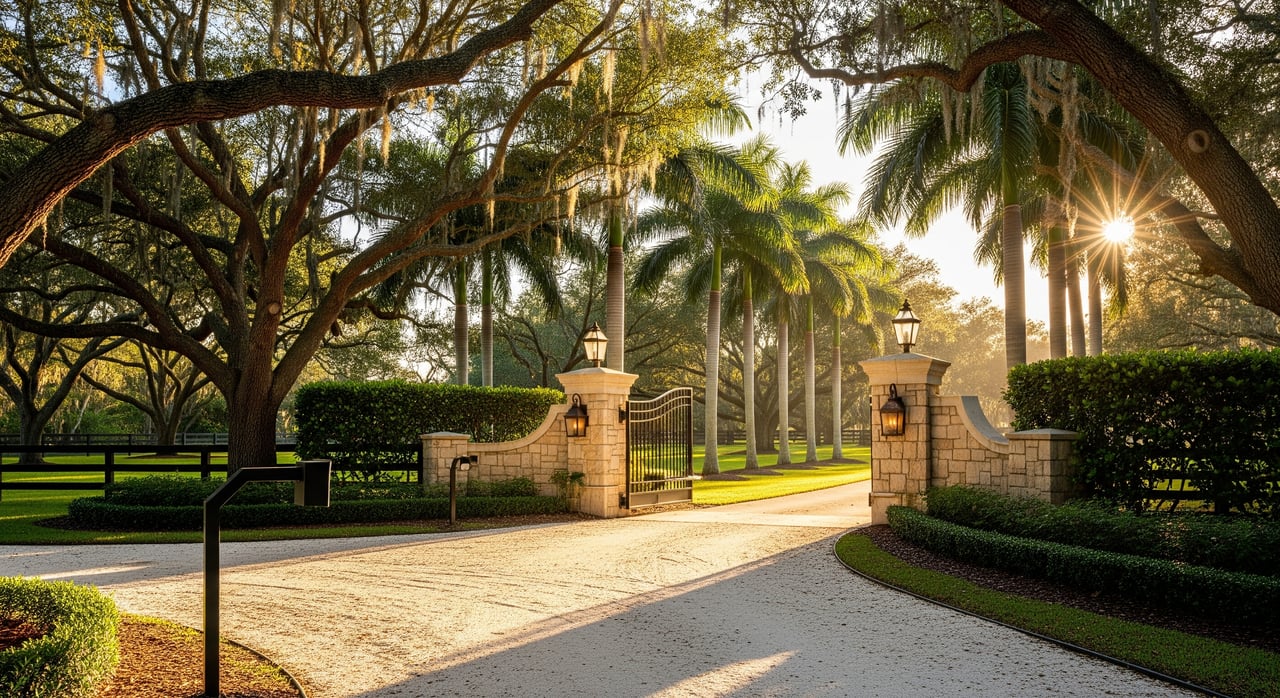
Your entry drive is the first impression of your Davie estate. It shapes privacy, curb appeal, and daily convenience, and it must perform in South Florida’s heat and heavy rain. If you plan the design with local rules, soils, drainage, and emergency access in mind, you can create a beautiful approach that works for decades. This guide shows you what to check, how to design for South Broward conditions, and which materials and details deliver long-term value. Let’s dive in.
Start with permits and records
Before you sketch alignments or pick materials, confirm what is allowed on your property and along the road.
Confirm authorities and approvals
- Town of Davie: Check driveway location, width limits, curb cuts, setbacks, lot coverage, and any tree or landscape protections. Ask if a new connection to a public road needs a permit.
- Broward County: If your drive connects to a county road or enters a county right-of-way, a county driveway or encroachment permit may be required.
- FDOT: Any connection to a state road typically needs an FDOT permit.
- South Florida Water Management District: Large grading changes or added impervious area can trigger stormwater permits. All projects must follow local stormwater standards.
- FEMA flood maps: Identify your flood zone and any base flood elevation that affects grading and drainage.
- Broward County Health Department: If you have septic, confirm drainfield locations and required setbacks from the drive.
- Sunshine 811: Call before any excavation to locate underground utilities and verify easements.
- Local Fire Marshal: Confirm emergency vehicle access widths, turning radii, load capacity, and gate access requirements.
- HOA or deed restrictions: Private communities or easements may limit alignment, materials, gates, lighting, or tree removal.
Gather key documents early
- Current property survey with boundaries and easements
- Title report or plat showing recorded easements
- FEMA flood map or elevation certificate
- Utility locations and septic tank/drainfield map
- Town of Davie site plan and permit requirements for your zoning
Addressing these items early prevents redesigns, delays, and permit denials.
Read the land: soils, water, trees
Successful drives in Davie start with an honest look at the site. Davie’s acreage often has flat grades, sandy or organic soils, and a high water table.
Soils and groundwater
- Expect sandy, sometimes poorly draining soils that need a stable base to prevent rutting.
- On long or private drives, or where soils look soft or organic, a geotechnical evaluation is advisable.
- If you encounter standing water or weak soils, consider soil stabilization or underdrains as directed by an engineer.
Drainage strategy
- Plan to manage stormwater on-site rather than shedding it to a neighbor or the street.
- Use a gentle crown on paved sections, roadside swales, or vegetated bioswales to slow and filter runoff.
- Where a swale crosses a driveway, install a properly sized culvert with erosion protection so natural flows continue.
- Permeable surfaces can reduce runoff, but they need the right base and regular maintenance in high water table conditions.
Trees and landscape
- Mature trees are common and may be protected. Place the drive to avoid critical root zones and minimize removal.
- Have an ISA-certified arborist mark significant trees before grading.
- Select native or Florida-friendly plants for swales and edges to stabilize soils and filter water while keeping maintenance reasonable.
Design for access and safety
Your drive should fit how you live. Plan for cars, service vehicles, trailers, and emergency access from the start.
Width and turning
- Single-lane drives typically function at 10 to 12 feet.
- Two-way drives are commonly 18 to 24 feet, depending on use.
- Passenger vehicles often use a 15 to 20 foot inside turning radius; trucks or horse trailers need larger radii.
- Consider a hammerhead, loop, or turnout where trailers or delivery trucks will turn around.
Gates and setbacks
- Set the gate far enough from the right-of-way to let one or two vehicles wait off the road.
- Choose gate automation with emergency override capability and ensure it does not block sightlines.
- Confirm Town of Davie and any HOA requirements for gate style, visibility, and setback.
Sight lines and lighting
- Maintain clear sight triangles at the road. Keep walls, hedges, and signs low in these zones.
- Use low-glare, downward-directed fixtures along edges or bollards to guide drivers without causing light trespass.
- Motion-activated or low-voltage LED can improve safety while reducing energy use.
Emergency access
- Confirm minimum clear widths and turning templates with the Fire Marshal.
- Gates often require a Knox box or similar system for secure emergency access.
- Provide adequate vertical clearance and a surface designed to support fire apparatus.
Choose the right surface
South Florida heat, UV exposure, and heavy rain can challenge driveway surfaces. Match your material to your aesthetics, budget, and maintenance goals.
Asphalt
- Pros: Smooth ride, efficient for long runs, modest upfront cost.
- Cons: Softens in heat, needs a well-built base in sandy soils, periodic sealing is recommended, can rut under heavy loads if the base is weak.
Concrete
- Pros: Durable, long life, good for heavy vehicles, finish options for a polished look.
- Cons: Higher initial cost, may crack if subgrade moves, bright reflectivity can affect neighboring areas.
Concrete pavers and permeable pavers
- Pros: Attractive, easy to repair individual units, permeable options enhance drainage.
- Cons: Higher installation cost, careful base prep is critical, joints can invite weeds if not installed and maintained correctly.
Stabilized shell or crushed rock
- Pros: Rustic aesthetic, more pervious than pavement, aligns with rural character of many Davie properties.
- Cons: Requires periodic grading and top-up, can shift under frequent or heavy traffic, may need binder or geotextile for stability.
Grass or vegetated grid
- Pros: Highly permeable, blends with landscape, good for overflow or low-use access.
- Cons: Not suited to frequent heavy traffic, requires mowing and irrigation management.
Permeable asphalt or concrete
- Pros: Reduces runoff and supports infiltration.
- Cons: Performance depends on keeping pores clear of sediment; plan for routine vacuum sweeping or pressure washing.
Build a stable base
- Remove organic material and install geotextile over the subgrade to separate soils from the base.
- Use a compacted granular base such as limestone or concrete aggregate; 6 to 12 inches is common for passenger vehicles, thicker for heavy equipment.
- For permeable systems, design a deeper aggregate reservoir to store stormwater.
Culverts and drainage features
- Use a 1 to 2 percent crown or cross slope to shed water from the surface.
- Where you cross a swale, size culverts to maintain natural flow and add headwalls or armoring to prevent erosion.
- Avoid concentrating flows that can undermine edges or impact neighboring properties.
Coastal and salt exposure
- If your site is closer to the coast, choose corrosion-resistant metals and concrete mixes designed for chloride exposure.
- Use stainless or hot-dip galvanized hardware and UV-tolerant materials.
Maintenance and sustainability
Plan for upkeep so your drive performs well and looks sharp year after year.
Maintenance by surface
- Asphalt: Seal every few years and patch cracks as they appear.
- Concrete: Maintain joints and seal cracks to prevent water intrusion.
- Pavers: Renew joint sand, control weeds, and re-level localized settlements.
- Shell or gravel: Grade periodically and replenish material as needed.
- Permeable surfaces: Vacuum sweep or pressure wash to keep voids open.
Water quality and landscape
- Keep impervious area to the minimum that meets your needs.
- Integrate swales, bioretention, or native plantings to filter and slow runoff.
- Preserve shade trees where possible to reduce heat and surface wear.
Plan your project
Map out the steps from concept to completion so your timeline and budget stay on track.
Recommended professionals
- Civil or site engineer for layout, grading, and stormwater design
- Geotechnical engineer for soil evaluation and pavement recommendations
- Licensed driveway or road contractor experienced in South Florida conditions
- ISA-certified arborist to protect significant trees and manage root-zone impacts
- Surveyor to verify boundaries and easements
- Local Fire Marshal and building officials for emergency access and gate requirements
- Landscape architect for swales, screening, and native planting plans
Typical timeline
- Site assessment and schematic design: 2 to 6 weeks
- Permitting with Town, County, and any regional agencies: a few weeks to several months depending on scope
- Construction: days to several weeks; longer if culverts, stabilization, or complex grading are required
Value and resale considerations
- A well-designed drive can elevate curb appeal, security, and daily convenience for acreage properties.
- Buyers in Davie often value privacy, easy trailer access, and dependable drainage that performs during heavy rain.
- Thoughtful alignment, appropriate materials, and documented compliance support value defensibility when you go to market.
Ready to plan a private entry that complements your acreage and stands up to South Florida weather? Reach out to the team at Tommy Crivello Real Estate Group to discuss market expectations and how your site improvements can support your long-term goals.
FAQs
Do Davie homeowners need a permit for a new driveway connection?
- In many cases yes, especially if you connect to a public road, work in a right-of-way, change drainage, or install a gate. Confirm requirements with the Town of Davie and Broward County.
How wide should a private driveway be on acreage?
- For single-lane use, plan 10 to 12 feet; for two-way traffic, 18 to 24 feet is common. Emergency access, gates, and trailers may require wider sections.
What is the best driveway surface for South Florida weather?
- It depends on your goals. Concrete offers durability, asphalt works well for long runs with proper base, and pavers provide repair flexibility. Shell or permeable options can reduce runoff but need more maintenance.
How do I handle drainage on a long driveway in Davie?
- Use a crowned surface, roadside swales or bioswales, and culverts where you cross existing swales. Design to keep runoff on-site or convey it to approved systems per local standards.
Can I route the driveway to avoid removing mature trees?
- Often yes. Use a survey and arborist input to align the drive outside critical root zones, and consider narrower segments or protective measures during construction.
What do I need to know about gates and emergency access?
- Set the gate back so vehicles can wait off the road, provide an emergency override such as a Knox box if required, and confirm clear width, turning radii, and load capacity with the Fire Marshal.
Who maintains a shared driveway on acreage in Broward?
- Maintenance should be defined in a written, recorded agreement or by HOA rules so each party’s responsibilities are clear.