Thinking about adding a barn, arena, or a more complete horse setup in Southwest Ranches? This is one of those projects where a great idea on paper can get complicated fast if you skip the local rules. If you want to build with confidence, protect your investment, and keep future resale clean, it helps to understand how the town looks at equestrian properties before you start. Let’s dive in.
Why classification comes first
In Southwest Ranches, the first step is not picking finishes or drawing a site plan. It is figuring out how the town will classify your project.
That matters because the town separates agricultural districts like A-1 and A-2 from rural and estate districts like RE, RR, and RR-A. The RR-A district is intended to preserve larger plots and more open space than other districts, which can shape how an equestrian improvement fits on the land.
The town also treats commercial equestrian operations differently from personal or family horse use. That commercial category includes activities such as boarding, riding instruction, grooming and care instruction, training, breeding, and guided or unguided horseback riding.
In practical terms, a private barn for your own horses may follow a different review path than a property used for lessons or boarding. If you are building now and may expand your use later, it is smart to think about that early.
Know what is actually permitted
One of the most important local rules is simple: if a use is not expressly permitted, it is prohibited. That means you should not assume that every horse-related feature is automatically allowed just because horses are already on the property.
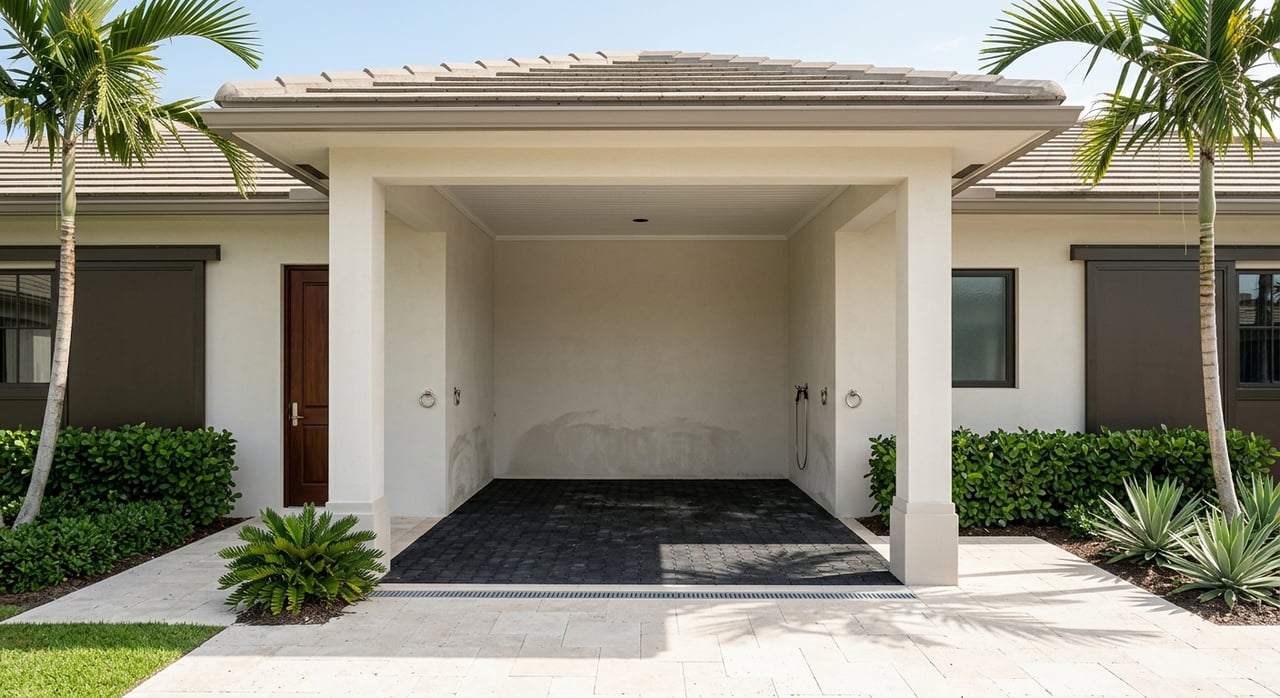
Items like wash racks, trailer storage, training areas, lessons, or event-related uses should be checked one by one with the town. The fact that they seem secondary does not mean they are automatically approved.
This is where owners often run into trouble. A project can start as a straightforward ranch improvement, then become more complex once added uses are layered in.
Start with zoning and address confirmation
Before any permit application can be reviewed or issued in Southwest Ranches, the town says you must obtain a street address from the Engineering Department. That is an easy detail to overlook, but it is a required early step.
After that, zoning and permitting move through Town Hall with J.A. Medina, LLC, while building permit and inspection services are handled by CAP Government, Inc. The sequence matters, because many permits require zoning and engineering approvals before the building permit is issued.
If you are planning a barn, arena, stable expansion, or related site work, think of the process as a chain. If one link is missing, the rest of the project can stall.
What the approval path usually includes
A typical equestrian project in Southwest Ranches is not just a building exercise. It is a zoning, engineering, permitting, and documentation exercise from start to finish.
Most owners should expect the process to include:
- Confirming the property's zoning and proposed use
- Obtaining a street address from the Engineering Department
- Working through planning and zoning review
- Completing engineering review where required
- Preparing the building permit package
- Submitting through CAP Government's online portal
- Providing the Broward County Uniform Building Permit Application
- Recording or providing a Notice of Commencement
- Completing required inspections
- Securing a Certificate of Use or Certificate of Occupancy/Completion if required by the final use
That structure is important for more than compliance. It also helps create a clean approval history that can support a future sale or refinance.
Barn and shelter setbacks matter
Setbacks can have a major effect on where you place a barn or any roofed structure used to shelter, house, or keep animals. In the agricultural and rural districts, the code requires a 50-foot yard for those structures.
For noncommercial farms, the code also requires a 50-foot front yard and 25-foot yards on the remaining sides. If your layout does not fit inside those standards, a redesign may be easier than trying to force a structure into the wrong location.
There is a path for reduced setbacks on a noncommercial farm, but it is not automatic. The town requires a special-exception process and a showing that the setback rule would interfere with a generally accepted farming practice.
The code also states that these yard sections do not apply to nonresidential farm buildings. Because agricultural exemptions and classifications can change the analysis, owners should confirm how their specific project will be treated before relying on a reduced review path.
Agricultural exemptions can change the path
Florida law adds another layer to equestrian construction planning. Section 604.50 says that a nonresidential farm building, farm fence, or farm sign on land used for bona fide agricultural purposes is exempt from the Florida Building Code and from county or municipal code or fees, except for floodplain-management rules.
That can be significant for some agricultural barns and related improvements. Florida fire-safety law also gives special treatment to certain nonresidential farm buildings and agricultural pole barns.
Still, this is not something to assume. The safer approach is to verify whether your planned structure truly qualifies before you base your timeline or budget on an exemption.
Floodplain and drainage should be early priorities
In Southwest Ranches, site work can be just as important as the structure itself. The town notes that most of the area is in FEMA Zone AH, which makes floodplain conditions a major design issue for many properties.
If your project involves fill, excavation, grading, or arena base work, engineering review can become a central part of the process. Changes to elevation and drainage can affect approval timing and final design.
This is why early planning matters. It is far easier to address drainage and floodplain concerns at the concept stage than after permit review has started.
Trailer circulation and storage are code issues too
On equestrian properties, functionality goes beyond the barn. Trailer access, turning space, parking, and equipment storage all deserve attention from the beginning.
The code allows storage of vehicles and equipment needed for a permissible agricultural or equestrian use on the same plot, as long as they are properly registered to the owner or lessee. It also limits the aggregate capacity of equestrian transports to the number of stables or horses kept on the property, whichever is greater.
That means trailer planning is not just about convenience. It is part of whether the site works under the local code.
Rural character affects design choices
Southwest Ranches places clear value on rural character, open space, screening, buffering, and landscape control. This is especially relevant where outdoor storage or vehicular use areas are visible from streets or neighboring parcels.
In simple terms, projects that look organized, buffered, and consistent with the town's rural framework tend to fit better than projects that read like a more intensive commercial complex. Even when a use is allowed, appearance and site organization still matter.
For owners, that can influence choices such as where to place storage, how to screen service areas, and how much paved or active-use area is visible from the road.
Think about resale while you build
If you are investing in an equestrian facility, it is worth thinking beyond today's needs. In Southwest Ranches, the most marketable improvements are often the ones that are fully permitted, well documented, and visually consistent with the town's rural character.
Buyers will often want to know whether the barn or arena is permitted for its actual use, whether future owners can rely on the same approvals, and whether the zoning, engineering, building, and inspection records are easy to produce. A clean paper trail can matter as much as the structure itself.
That is especially true in estate and acreage transactions, where due diligence tends to be more detailed. Good planning now can support both enjoyment and long-term value later.
A smart way to approach your project
If you are building or expanding an equestrian facility in Southwest Ranches, the best approach is usually to slow down at the beginning so you do not run into expensive surprises later. Start by confirming the intended use, zoning fit, address status, setback implications, and any possible agricultural exemption.
From there, focus on engineering issues like drainage, floodplain conditions, grading, and circulation before finalizing the building package. That kind of preparation can help you move through approvals more smoothly and protect the property's marketability.
If you are buying, selling, or evaluating an equestrian property in Southwest Ranches, working with a team that understands acreage, valuation, and local land-use context can make a real difference. For private guidance on equestrian and estate property strategy, connect with Tommy Crivello Real Estate Group.
FAQs
Do I need a permit for a barn or arena in Southwest Ranches?
- Usually yes, unless the structure qualifies for a specific agricultural exemption under Florida law.
Can I add horse boarding or riding lessons to my Southwest Ranches property later?
- Possibly, but those activities may place the property in the town's separate commercial equestrian category, which can change the review path.
What should I do first for an equestrian project in Southwest Ranches?
- Start by confirming zoning and obtaining a street address from the Engineering Department before moving into building review.
Are barn setbacks flexible in Southwest Ranches?
- Not automatically. For noncommercial farms, reduced setbacks require a special-exception process and a showing that the rule interferes with a generally accepted farming practice.
Why does floodplain review matter for Southwest Ranches equestrian construction?
- The town notes that most of Southwest Ranches is in FEMA Zone AH, so fill, grading, excavation, and arena base work can raise important engineering and drainage issues.